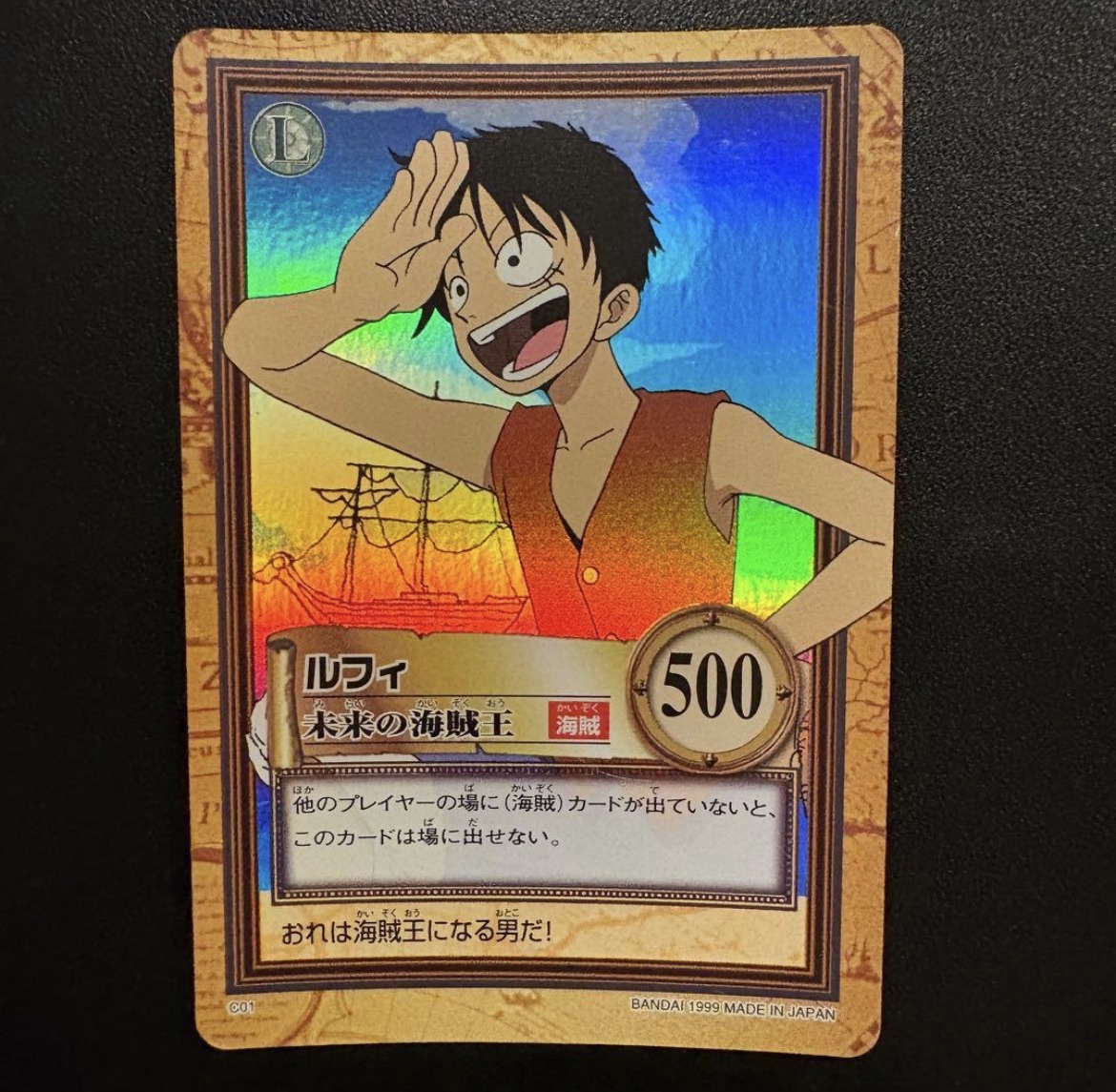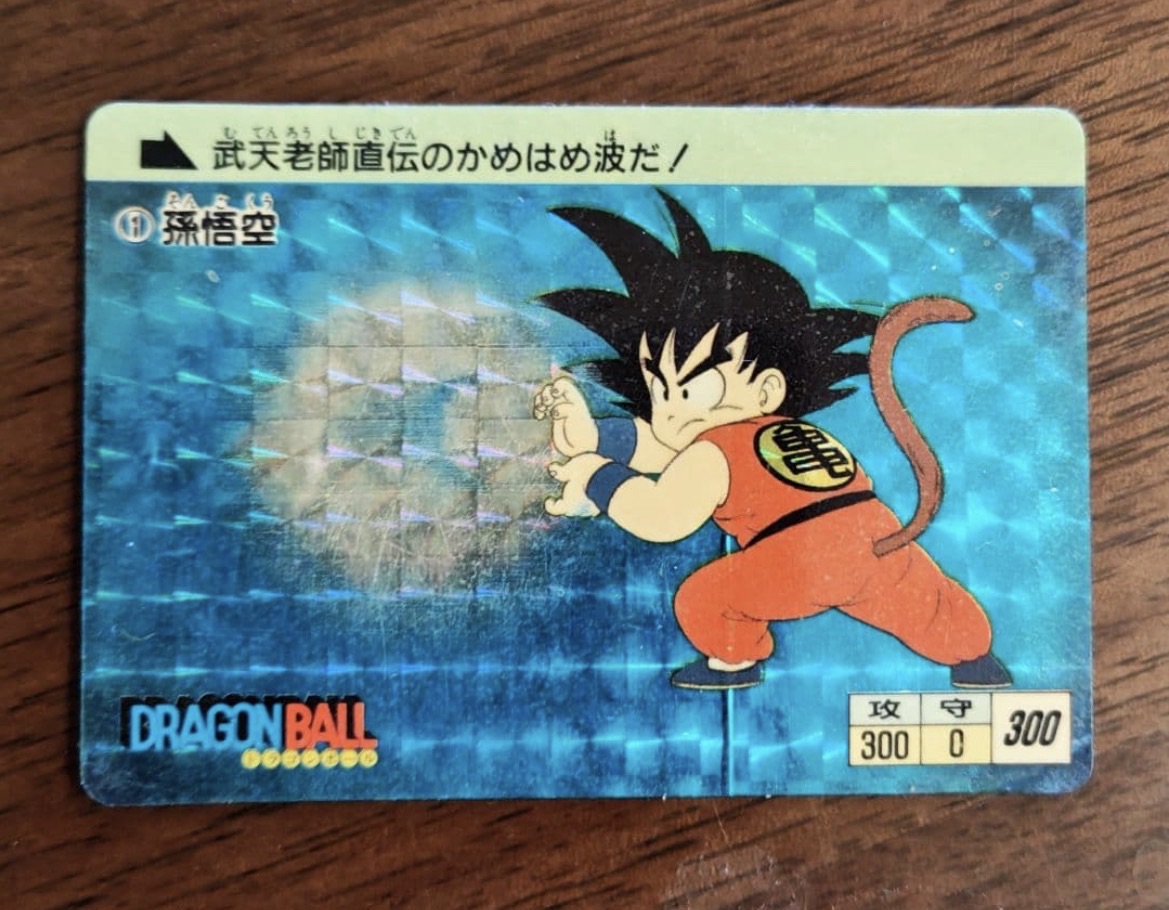
In Part 1 of this series, we covered Carddass Hyper Battle — the very first One Piece trading cards, released in 1999. But Hyper Battle wasn’t the end of the story. Over the next decade and a half, Bandai released several more One Piece card lines, each with a completely different format, mechanic, and collector appeal. Here’s what to know about three of the most notable: From TV Animation, Miracle Battle Carddass, and One Piece Berry Match.
From TV Animation: The Direct Successor to Hyper Battle
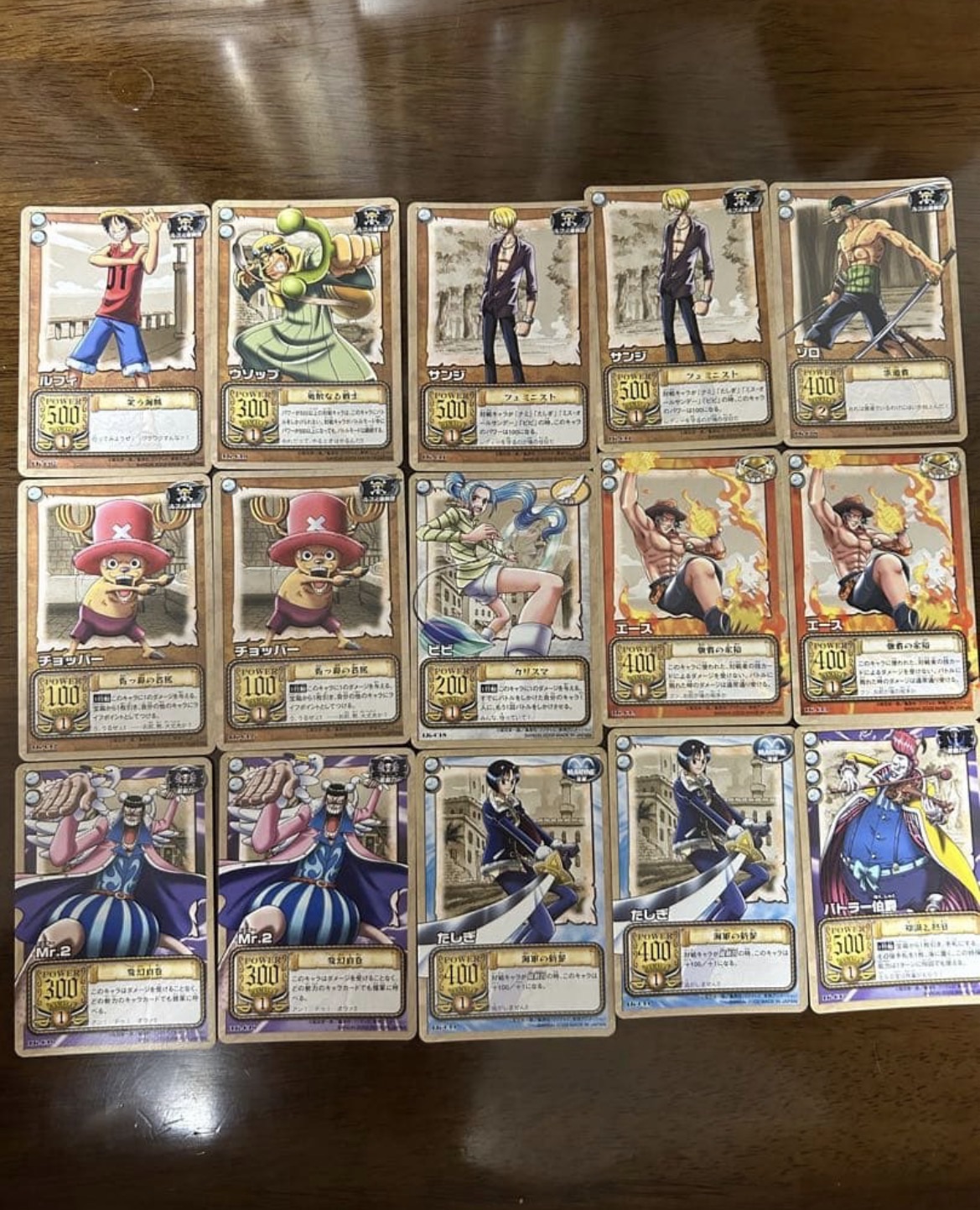
When the Carddass Hyper Battle series ended in 2002, Bandai didn’t abandon One Piece cards — it gave the property its own dedicated line for the first time. “From TV Animation ONE PIECE Card Game” ran from 2002 through late 2005, and it’s best understood as a continuation of Hyper Battle rather than a new product: it kept the same team-battle card mechanics, but dropped the “Hyper Battle” branding now that One Piece was popular enough to stand on its own.
Key things to know:
- Story coverage picked up where Hyper Battle left off, continuing through the Grand Line arc
- Cards carried over familiar rarity finishes — glossy/holo rares, “字レア” (text-effect rares), and combination foil-plus-effect rares
- Because it directly followed Hyper Battle, the two lines are frequently found and sold together, and are easy to mix up if you’re not looking closely at the card back or set markings
If you’re shopping for “vintage One Piece Carddass” and see a card dated 2002–2005 rather than 1999–2002, you’re most likely looking at a From TV Animation card rather than true Hyper Battle.
Miracle Battle Carddass: The Multi-Franchise Crossover Era
Miracle Battle Carddass is a completely different animal. Launched in December 2009, it wasn’t a One Piece-only product — it was a crossover trading card game spanning multiple Weekly Shonen Jump franchises, starting with Dragon Ball and One Piece together, and later expanding to include Toriko, Hunter x Hunter, Naruto Shippuden, Bleach, Gintama, and Kuroko’s Basketball.
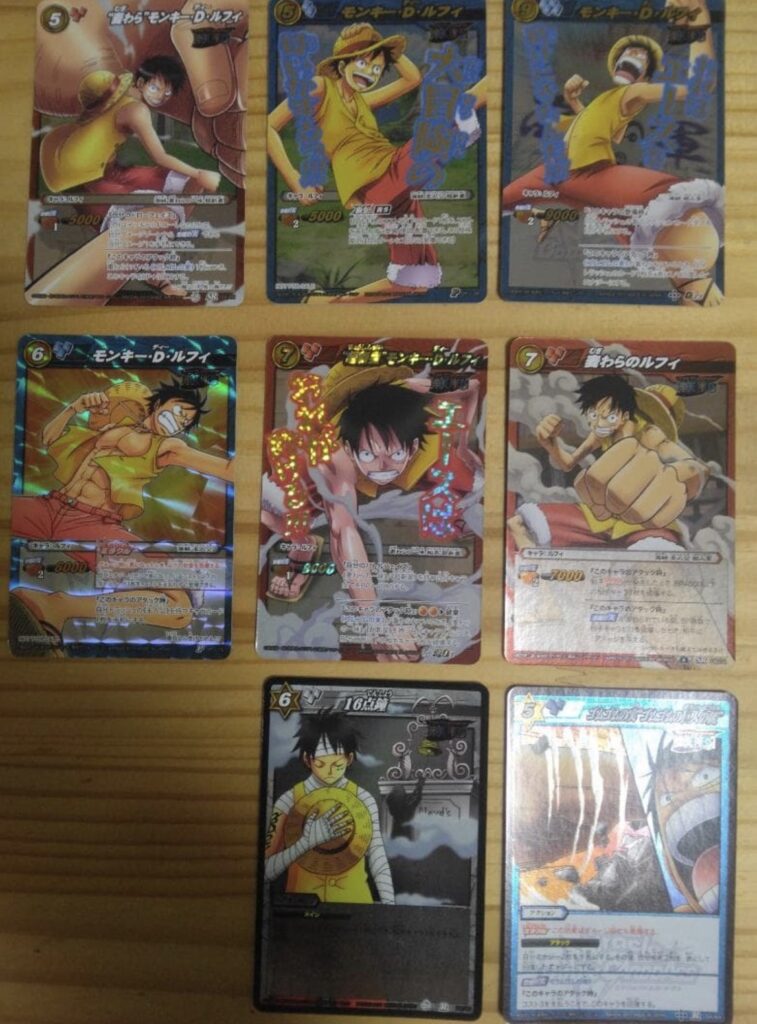
What makes Miracle Battle distinct from the earlier lines:
- Full game system built around a resource called “Jump Power” and a comeback mechanic called “Miracle Counter”
- Color-based card types (red, purple, green, white, blue, black), each with its own strategic role
- “Miracle Kira” — special holo-foil rare cards that are the chase cards of the series, especially those featuring Luffy or other Straw Hat crew members
- Sold both in standard booster packs and through dedicated vending machines (“Miracle Battle Tower”) that offered better odds at pulling rares than a standard pack
Because Miracle Battle ran for several years and spanned many booster sets, condition and specific set/rarity matter a lot here — a “Miracle Kira” Luffy from an early set is a very different collectible than a common from a later expansion.
One Piece Berry Match: Not a Trading Card Game At All
This is the one that surprises collectors the most. One Piece Berry Match isn’t a trading card game in the traditional sense — it’s a “Data Carddass,” meaning the cards were designed to be scanned into an arcade cabinet, with the physical card acting more like a game token than a standalone playable card.
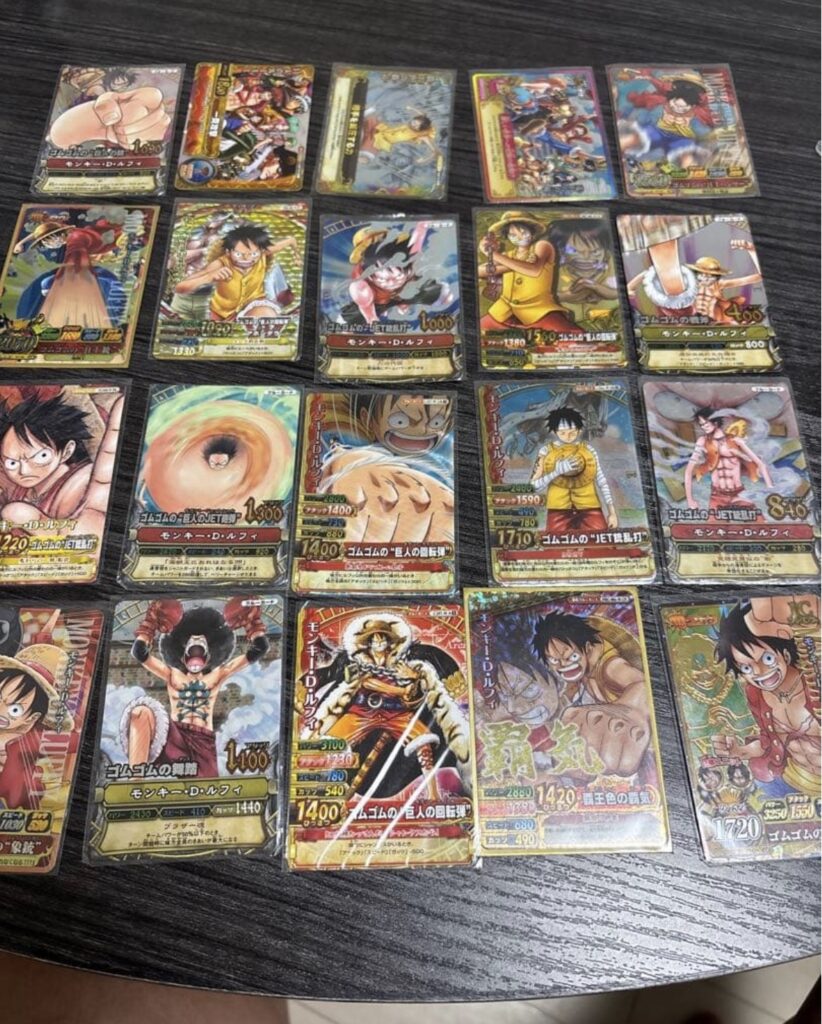
A quick timeline:
- May 2008 — original “One Piece Berry Match” arcade cabinet launches
- September 2009 — relaunched as “Berry Match Double” with new gameplay
- October 2011 — upgraded again to “Berry Match IC,” adding IC card support for saving progress and customizing a pirate crew
- December 2012 — the concept was carried forward into a new title, “One Piece Treasure World”
Visually, Berry Match cards stand out from Hyper Battle, From TV Animation, and Miracle Battle because many series used original watercolor-style artwork rather than anime screenshots or manga panels — something Bandai specifically marketed as a collector’s draw at the time.
Because these cards were built around arcade software that’s now long discontinued, they’re pure collectibles today — nobody is scanning them into a working cabinet. Collectors chase them mostly for the unique art style and for tying into a specific era of the anime (several sets were built around major arcs like the Battle of Marineford).
How These Three Lines Compare
Line Years Format What Makes It Distinct From TV Animation 2002–2005 Team battle card game Direct successor to Hyper Battle Miracle Battle Carddass 2009–2014+ Multi-franchise TCG Crossover with Dragon Ball, Naruto, etc.; “Miracle Kira” chase cards One Piece Berry Match 2008–2012 Arcade “Data Carddass” Watercolor art; cards scan into an arcade machine
Where to Find These Cards Today
All three of these lines were sold exclusively in Japan and were never officially released overseas, which makes sourcing from a Japan-based seller the most reliable way to get authentic cards. At Taka Nihon Shop, we carry a rotating selection of vintage, Luffy-focused One Piece cards spanning Hyper Battle, From TV Animation, Miracle Battle, and One Piece Berry Match.
👉 Shop vintage One Piece cards at Taka Nihon Shop
This is Part 2 of our vintage One Piece card series. Have questions about a specific card or set you’re trying to identify? Send us a message — we’re always happy to help collectors pin down what they’ve found.